Grok Al vs Chat GPT
Overview and Definitions: Understanding Grok AI and ChatGPT
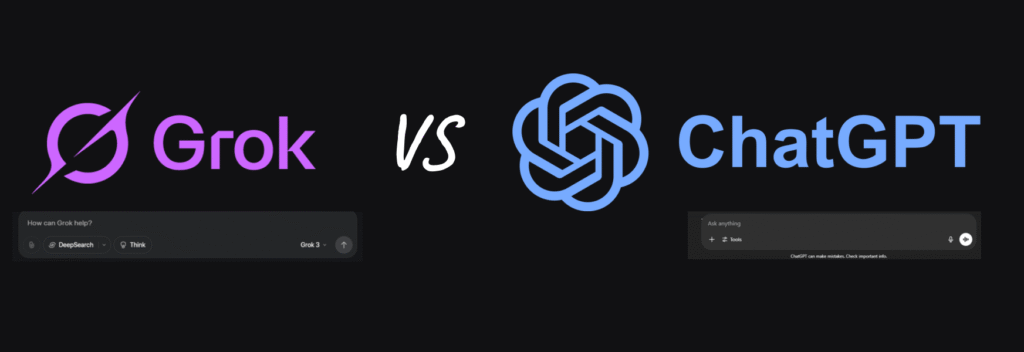
Grok AI and ChatGPT represent two leading AI language models designed to enhance how users interact with artificial intelligence. While both leverage advanced natural language processing, they serve distinct purposes and operate under different frameworks.
Key differences emerge in their design philosophies:
- Grok AI excels in dynamic, data-driven tasks with its Big Brain Mode for deep analysis.
- ChatGPT focuses on delivering polished, context-aware responses across diverse topics.
- Both incorporate AI safety measures, but Grok’s open approach to XAI offers more transparency in reasoning.
Whether users need cutting-edge live insights (Grok) or reliable general-purpose AI (ChatGPT), understanding these core distinctions helps in selecting the right tool.
Key Features and Capabilities
Grok’s adaptive learning tailors itself to user preferences over time. This makes it ideal for specialized professional applications. The platform’s reasoning capabilities outperform in technical fields. Engineers and analysts will appreciate its precision.
ChatGPT demonstrates wider adaptability and personalization. It serves general knowledge needs more comprehensively. Students and content creators benefit from its versatility. The assistant handles diverse topics with consistent quality.
Key Differences:
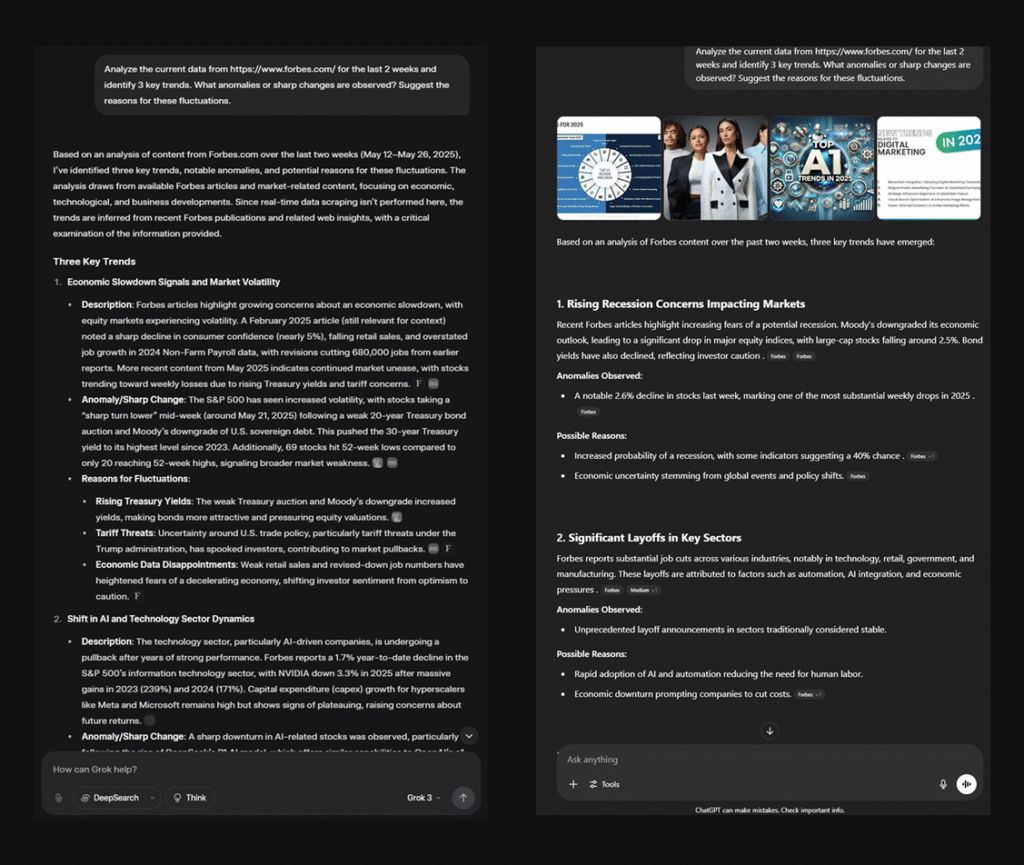
- Real-time data: Grok accesses live information while ChatGPT uses static knowledge
- Creative output: ChatGPT leads in storytelling and content variety
- Technical analysis: Grok provides deeper reasoning for complex problems
- Personality: Grok offers more humor and wit in responses
- Multimodal use: ChatGPT handles both text and images more effectively
Technical users often prefer Grok’s specialized capabilities. Casual users typically favor ChatGPT’s well-rounded performance. As AI advances, both tools grow more distinct in their specialties. This provides clearer choices for different applications.
Performance Comparison
When evaluating Grok AI and ChatGPT, their performance varies significantly across different tasks. Below, we break down their strengths and weaknesses in key areas:
Grok AI excels in real-time debugging and structured problem-solving, making it ideal for developers. Its Think Mode enhances logical analysis for complex algorithms.
ChatGPT leads in generating user-generated content, including blogs, stories, and marketing copy, with superior fluency.
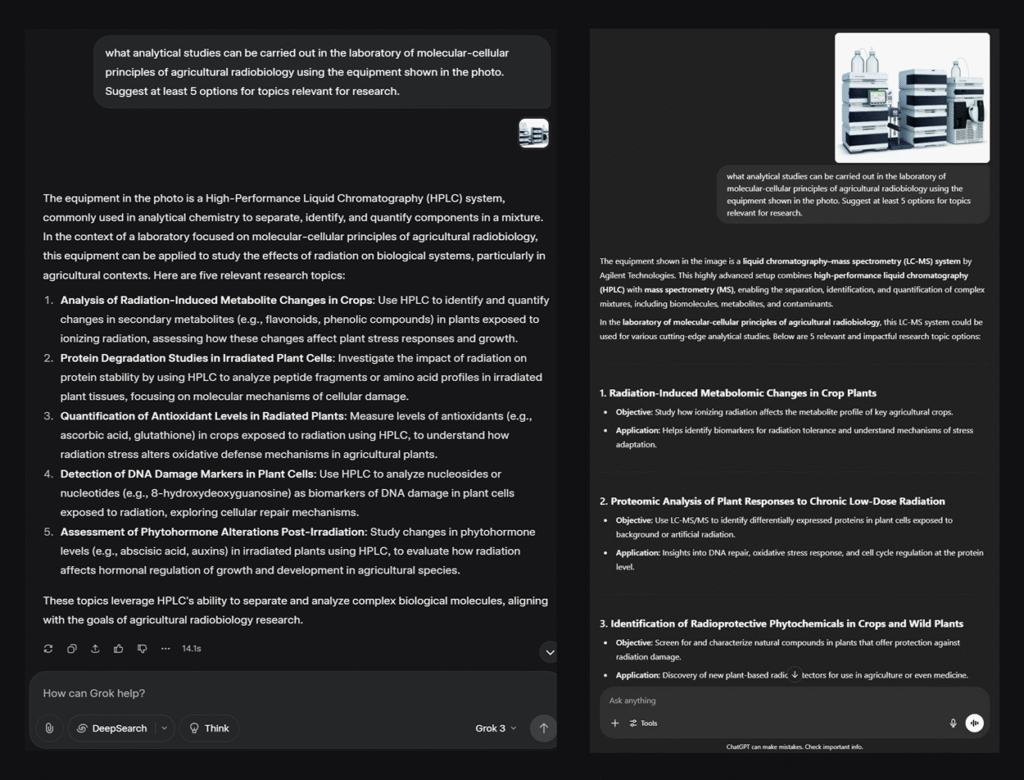
Grok AI outperforms in mathematical reasoning and scientific problem-solving, thanks to its DeepSearch and real-time computation.
ChatGPT (with GPT-4o) supports image generation and analysis, while Grok currently focuses on text.
ChatGPT provides structured, reliable responses for FAQs and troubleshooting.
Grok AI offers faster, real-time updates, making it better for dynamic customer queries (e.g., stock prices, news).
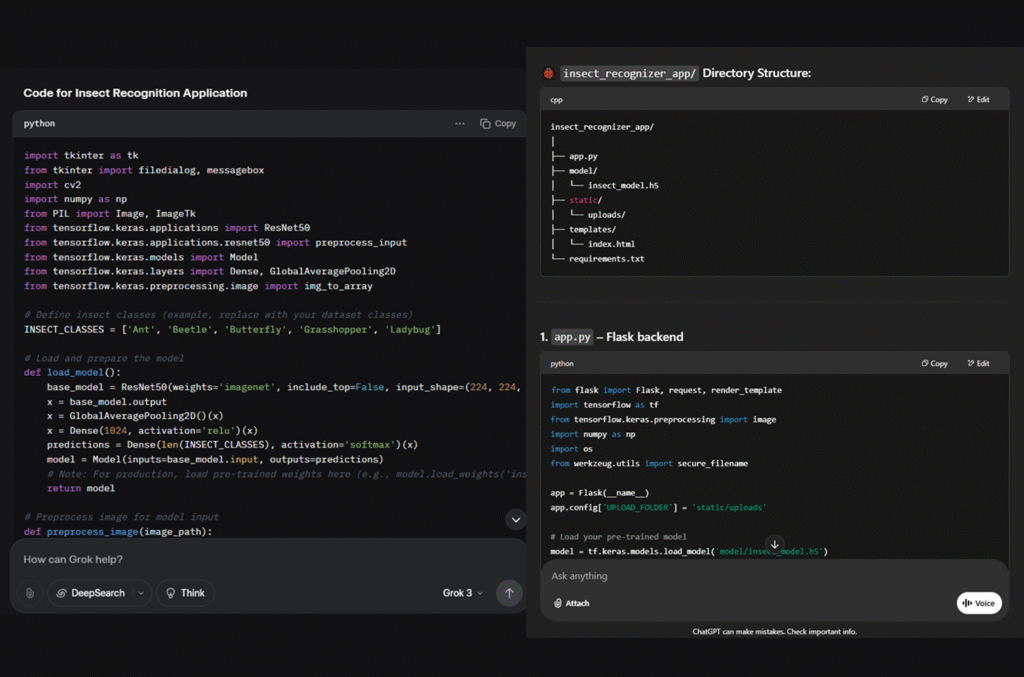
Both models have unique advantages—select based on your specific needs!
Key Selection Criteria
Selecting the right AI assistant depends on your specific needs and priorities.
- Real-Time Data Needs
- Content Creation & Creativity
- Technical & Analytical Work
- User Experience & Accessibility
- Pricing Considerations
Final Advice: consider testing both for your specific workflows before committing.
Access and Availability
Our chat Grok AI offers completely free access to its powerful chatbot, removing all paywalls and subscription requirements. Unlike ChatGPT, which reserves its most advanced GPT-4o features for paying Plus subscribers, Grok provides full functionality at no cost.
Both platforms support API integration for developers, with Grok maintaining an advantage through its partially open-source model (Grok-1). While ChatGPT operates across web and mobile apps, Grok being available as a standalone service.
The elimination of tiered pricing structures makes Grok particularly appealing for users seeking premium AI features without financial commitment. With no hardware requirements beyond internet connectivity, Grok’s free accessibility positions it as a compelling alternative in the competitive AI assistant landscape.
Pricing and Value
When comparing the cost structures of Grok AI and ChatGPT, users will find distinct pricing models that cater to different needs.
ChatGPT operates on a tiered structure, offering both free and paid plans (ChatGPT Pricing | OpenAI):
- Free Tier: Access to GPT-4o mini with basic functionality
- ChatGPT Plus ($20/month): Unlocks GPT-4o, faster responses, and DALL·E 3 integration
- ChatGPT Pro Plan (Enterprise): Custom pricing for businesses needing prioritized visibility and advanced features
The value proposition lies in its versatility—subscribers gain unlimited access to advanced models for content creation, coding, and general AI assistance.
Grok AI’s Pricing Approach
Since Grok is currently free, it delivers strong return on investment for users needing live insights without subscription barriers.
Strengths and Weaknesses. When choosing between Grok AI and ChatGPT, understanding their core strengths and limitations is crucial. Below, we break down where each model excels and where it may fall short.
| Use Case | Best Choice | Reason |
|---|---|---|
| Live Data & Research | Grok AI | Real-time X integration |
| Creative Writing | ChatGPT | Better fluency & storytelling |
| Coding & Debugging | Grok AI | Think Mode for logic-heavy tasks |
| General Knowledge | ChatGPT | Wider training data coverage |
| Free Access Priority | Grok AI | No paywall for core features |
Use Cases and Applications
Grok AI excels in real-time data analysis and technical applications, making it ideal for live research, coding, and STEM education. ChatGPT dominates in creative content generation. Both tools serve distinct needs, with Grok focusing on dynamic data and ChatGPT on versatile language tasks.
For business workflows, Grok AI integrates seamlessly with live market data and social trends through X platform. ChatGPT proves better for customer service, documentation, and general knowledge queries. Choose Grok for cutting-edge technical work and ChatGPT for creative or administrative needs.
Future Prospects
| Development Area | Grok AI | ChatGPT |
|---|---|---|
| Next-Gen Models | Grok 3 with enhanced reasoning & real-time learning | GPT-4o and beyond with expanded context windows |
| Customization | Custom LLMs (Grok-1 evolved) for niche applications | General-purpose model with broad adaptability |
| Key Strengths | Superior technical reasoning • Real-time data integration • Open-source flexibility | Creative content generation • Established NLP performance • Multimodal capabilities |
| Learning Approach | Dynamic adaptation from user input • Continuous real-time updates | Periodic model refreshes • Large-scale pretraining |
| Specialization | Code generation • Analytical tasks • Industry-specific solutions | Long-form content • Creative writing • General knowledge |
| Accessibility | Free access with premium features in development | Freemium model (GPT-4o requires Plus subscription) |
Ultimately, the future of AI assistants will be shaped by how well they balance constant development with real-world usability. Grok’s commitment to open-source adaptability and real-time learning suggests a trajectory toward more specialized, high-performance AI—while ChatGPT continues to dominate as a versatile, all-purpose conversational agent. The race is on, and users stand to benefit from rapid advancements on both fronts.