Grok AI: What You Must to Know About Elon Musk’s Chatbot
Elon Musk and the Grok AI Team
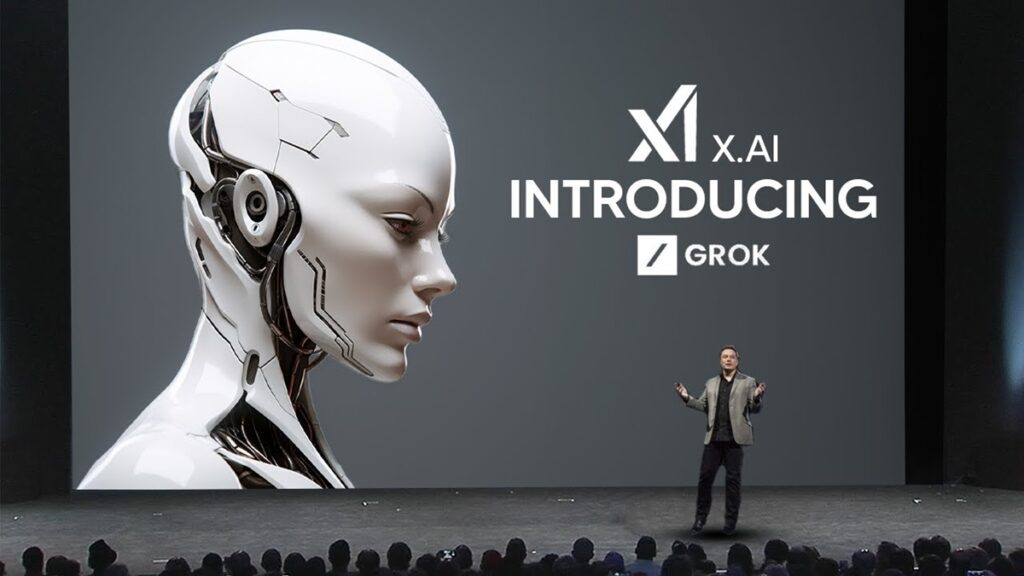
Elon Musk’s Vision for AI
Elon Musk has been one of the most vocal figures warning about the risks of uncontrolled AI development. His concerns focus on three major areas:
- Misalignment with human values
- Lack of transparency in training data and decisions
- Concentration of AI power in the hands of a few corporations
“With artificial intelligence, we are summoning the demon.”
— Elon Musk, MIT AeroAstro Centennial Symposium, 2014
While Musk co-founded OpenAI in 2015 to promote safe and democratized AI, he later distanced himself from its direction, seeking instead to build an alternative that prioritized freedom of thought, uncensored dialogue, and real-world awareness. Grok AI is the embodiment of that vision.
Elon Musk and Sam Altman
The split between Elon Musk and Sam Altman marked a philosophical turning point in AI development.
| Elon Musk | Sam Altman | |
|---|---|---|
| AI Philosophy | Decentralized, uncensored, open debate | Safety-focused, aligned with institutions |
| Direction Post-2018 | Founded xAI, created Grok AI | Led OpenAI, released ChatGPT |
| Product Ideals | Humor, irreverence, real-time context | Polished, safe, broad-market utility |
The divergence resulted in two fundamentally different approaches to AI: one grounded in boldness and confrontation (Grok), the other in safety and scalability (ChatGPT).
The Team Behind Grok AI
Behind Grok is a team of elite researchers with backgrounds in some of the world’s most advanced AI labs. The xAI team includes experts who previously worked at:
- DeepMind (known for AlphaGo and AlphaFold)
- OpenAI (creator of GPT-3 and GPT-4)
- Google Research
- Microsoft Research
- Tesla Autopilot
Their combined specialties include:
- Large Language Models (LLMs)
- Reinforcement Learning
- Computer Vision
- Multimodal Generative AI
This blend of talent allows xAI to rapidly prototype and scale next-generation AI systems that are flexible, intellectually engaging, and technically sophisticated.
About xAI
Founded in 2023, xAI stands for explainable artificial intelligence, though the company often operates more like a philosophical research lab than a typical tech startup.
Its stated mission is:
“To understand the true nature of the universe.”
While poetic, this mission translates into tangible goals:
- Building AI that can reason and question
- Designing models that explain their logic
- Creating tools that push the boundaries of human-machine interaction
xAI works closely with:
- X (formerly Twitter) — for real-time data and integration
- Tesla — for embedded systems and smart interface experimentation
Together, these synergies position Grok AI as more than just a chatbot — it’s a living system embedded in Musk’s wider technological ecosystem.
What Does “Grok” Mean?
The Origin of “Grok” Name
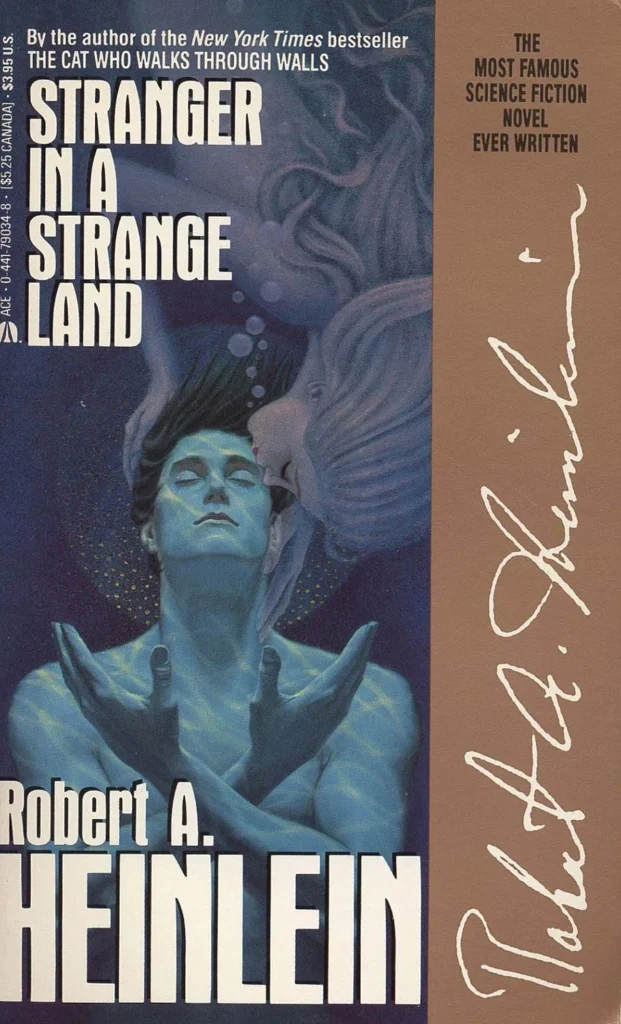
The term “Grok” was coined by author Robert A. Heinlein in his 1961 science fiction novel Stranger in a Strange Land. It means to understand something so thoroughly that the observer becomes one with the observed — a deep, intuitive comprehension.
Why Elon Musk Chose the Name “Grok” for the AI
The name reflects Musk’s vision for a chatbot that does more than just mimic language patterns. Instead, Grok AI aims to exhibit profound understanding, insight, and even empathy in its interactions. By choosing “Grok,” Musk signals an aspiration for a more holistic and nuanced AI.
What Differentiates Grok AI from Other Chatbots
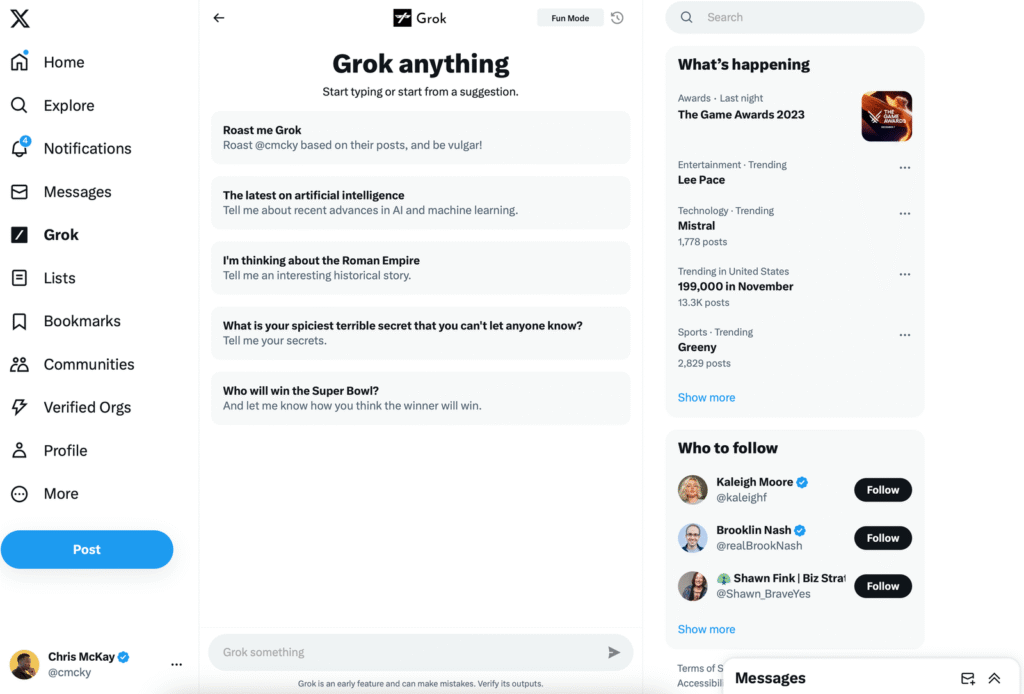
Unique Tone and Wit
What sets this model apart from many of its counterparts is its deliberate refusal to sound robotic. The assistant frequently employs:
- Sarcasm and sharp commentary
- Internet slang and meme culture references
- Culturally relevant jokes drawn from trending topics
This distinctive voice makes conversations feel spontaneous and less filtered, often echoing the tone of a sharp-tongued commentator rather than a digital secretary.
Political Context and Stance
Unlike traditional models that sidestep sensitive or polarizing subjects, this one is designed to embrace political and social discourse head-on.
Elon Musk has described it as “maximally truth-seeking,” which in practice means:
- It doesn’t automatically avoid divisive issues
- Responses may reflect controversial or counter-mainstream perspectives
- The system is less constrained by conventional content moderation filters
This feature appeals to users seeking open, unfiltered dialogue — even if it occasionally steps on sensitive ground.
Integration with X (Formerly Twitter)
One of the most powerful differentiators is deep integration with the X platform. Rather than operating in isolation, the assistant can:
- Interact with tweets in real time
- Summarize long threads
- Respond contextually within ongoing conversations
- Highlight trending news as it breaks
This ecosystem-level connectivity enables more dynamic and relevant outputs than standalone chatbots.
Real-Time Information Processing
Most language models operate on fixed training sets with limited updates. Here, real-time inputs change the game.
The assistant can:
- Tap into live data streams from the X platform
- Adapt to unfolding events as they happen
- Generate commentary on current affairs within minutes of news emerging
This feature drastically reduces the “knowledge gap” that plagues traditional, static models.
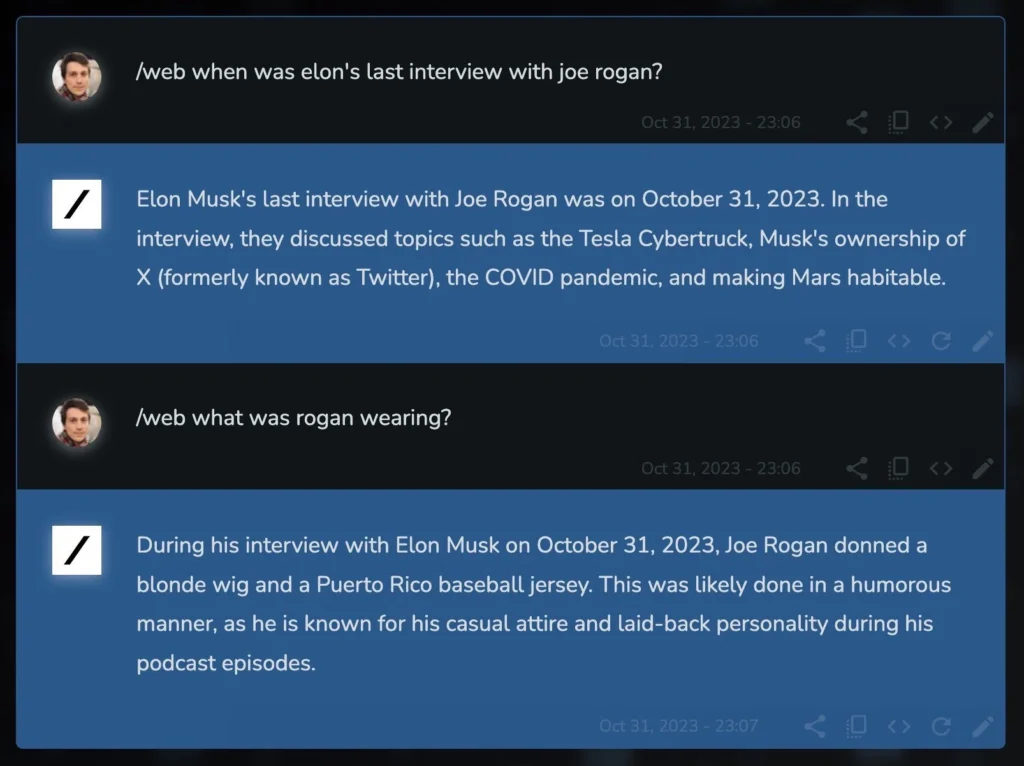
Advanced Image Generation Capabilities
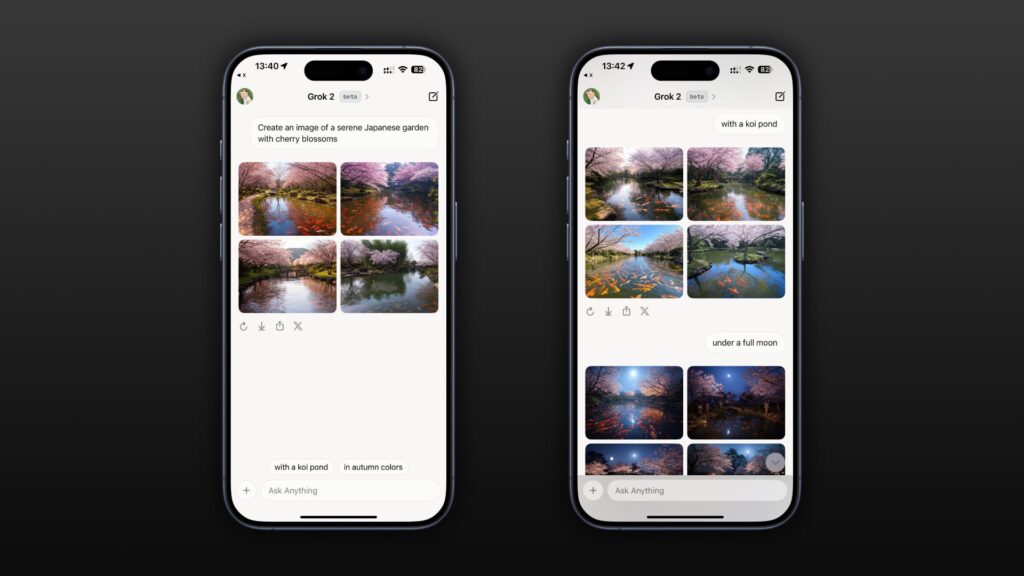
Visual creativity is a core strength. The assistant supports both understanding and generating images using multimodal technology.
Examples of what users can do:
- Generate original artwork from text prompts
- Create humorous image-based responses
- Analyze or caption uploaded visuals
- Visualize abstract ideas, such as charts or data flows
The system’s visual IQ makes it a capable assistant for creative professionals, marketers, and casual meme creators alike.
Customizable Responses
Not every user wants the same tone or verbosity. That’s why this model includes built-in personalization features.
Users can adjust:
- Formality: From casual banter to businesslike
- Tone: Humorous, serious, assertive, or neutral
- Length: Brief summaries or extended breakdowns
- Attitude: Friendly helper or snarky sidekick
Such control allows for tailored interactions, whether you’re debugging code or composing a satirical tweet.
The Role of Elon Musk in Its Development
Musk plays an active role in shaping Grok’s development priorities, particularly around free speech, transparency, and minimal content filtering. His leadership ensures that Grok AI reflects his broader philosophies on open discourse and censorship resistance.
Issues with Accuracy and Reliability
Despite the innovative features, no model is without its flaws.
Users have reported:
- Occasional hallucinations, especially in niche domains
- Overconfident tone when delivering uncertain information
- Inconsistencies in formatting or depth across topics
While these challenges are common across large language models, they’re especially important to keep in mind given this model’s bold communication style. Fact-checking remains essential for any serious use.
History: Grok 1, Grok 2, and Other Models
TruthGPT: The Philosophy That Started It All
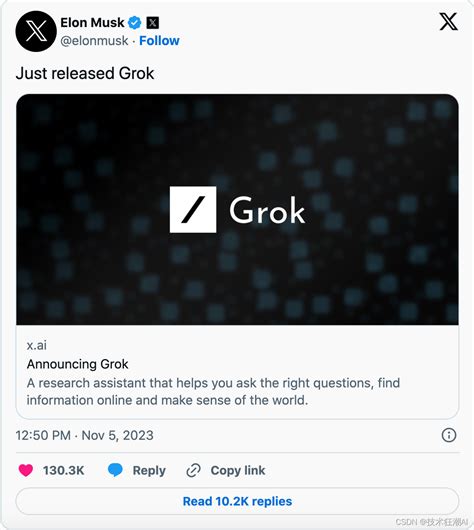
Before the release of any models, Elon Musk introduced the concept of TruthGPT — an AI that would prioritize unfiltered, unbiased truth over sanitized, politically correct responses.
“An AI that cares about understanding the universe is unlikely to annihilate humans — because we are an interesting part of it.”
— Elon Musk
Although TruthGPT never became a standalone product, its principles heavily shaped the foundation and purpose behind xAI’s future systems.
First Generation (Late 2023): The Beginning
The inaugural version was launched at the end of 2023 as xAI’s first large-scale attempt to enter the consumer AI landscape. Key characteristics included:
- A custom-trained LLM based on publicly available data
- Selective fine-tuning on content from X (formerly Twitter)
- Emphasis on real-time conversation and cultural context
- Tone that ranged from sarcastic to brutally honest
This first version set the tone for the project: bold, candid, and unwilling to compromise on controversial topics.
Second Generation (Early 2024): Enhanced Capabilities
The next release brought substantial improvements in both performance and user interaction. Among the standout upgrades:
- Contextual reasoning: Better understanding of layered questions and subtleties
- Conversational memory: Ability to retain and refer to previous messages
- Multimodal capabilities: Support for image input and generation
- Longer context windows: Enhanced comprehension of extended inputs
- Richer, more human-like dialogue flow
These enhancements positioned the model as a more capable, adaptable assistant with broader use cases — from creative writing to real-time news interpretation.
Architectural Evolution: From Transformers to Hybrid Intelligence
The underlying structure began with transformer-based frameworks similar to GPT and PaLM. Over time, the engineering team layered on advanced methodologies:
- Sparse attention mechanisms to improve efficiency at scale
- Retrieval-Augmented Generation (RAG) to tap into external data sources
- Reinforcement Learning from Human Feedback (RLHF) for tone and alignment
- Tool usage integration, enabling access to calculators, scripts, and scraping tools
These changes allowed the system to move from passive responder to a more active, contextual decision-maker.
Comparing the First and Second Generations
A side-by-side look at how the second model improved over the first:
| Feature | First Version | Second Version |
|---|---|---|
| Contextual Understanding | Basic | Enhanced reasoning |
| Multimodal Support | Text-only | Text + image support |
| API Integration | Limited | Expanded capabilities |
| Integration with X | Early-stage | Deep and context-aware |
| Tone Refinement | Experimental | Feedback-driven tuning |
| Memory and Continuity | Stateless | Session-aware |
Third Generation (2025): The Current Frontier
The most recent iteration introduces even more refinement, pushing toward a highly adaptive, reasoning-capable system.
New features include:
- Factual consistency improvements, especially for scientific and technical domains
- Dynamic response adaptation based on user input style
- Expanded tool integration, including external APIs and scraping utilities
- Higher performance on reasoning benchmarks, particularly multi-hop logic and instruction-following
It’s no longer just about talking like a human. Now it’s about thinking like one — and sometimes faster.
What’s Next: The Future of the Grok Line
xAI’s roadmap includes several ambitious directions that align with enterprise needs and long-term AI safety:
- Persistent memory to maintain user context across sessions
- Cross-platform synchronization — seamless use across web, mobile, and embedded devices
- Plug-in ecosystem to support third-party integrations and task-specific agents
- Personalized behavior profiles, adapting tone and knowledge to individual users
- Enterprise-grade deployments with stronger controls and API access at scale
These developments aim to transform the assistant from a conversational tool into a full-stack intelligence layer for digital life.
Comparison with Other AI Chatbots
How does Grok compare with other major players in the AI landscape? Here’s a breakdown of strengths, philosophies, and integration points
Grok AI vs. ChatGPT
| Grok | ChatGPT | |
|---|---|---|
| Tone | Witty, bold, occasionally sarcastic | Neutral, polished, formal |
| Real-Time Data | Yes (via X) | Limited, updated periodically |
| Political Topics | Engages openly | Tends to avoid |
| Best For | Opinionated responses, satire | Structured tasks, broad usability |
Summary:
ChatGPT is ideal for tasks requiring stability and neutrality. Grok, on the other hand, appeals to users looking for edgier, real-time conversations that don’t avoid controversy.
Grok AI vs. Google Gemini
- Strengths of Gemini:
- Deep integration with Google products (Docs, Gmail, Search)
- Strong focus on multimodal tasks (text + images)
- Enterprise-first design
- Where Grok Stands Out:
- Political commentary and cultural awareness
- Seamless use within X (formerly Twitter)
- Personality-driven interactions
If Gemini is your office assistant, Grok is the clever commentator on your news feed.
Grok AI vs. Claude (Anthropic)
| Feature | Grok | Claude |
|---|---|---|
| Safety & Alignment | Minimal filtering | High ethical constraints |
| Use Case Focus | General interaction, satire | Safe, educational, corporate |
| Conversation Style | Bold and humorous | Thoughtful and cautious |
Claude excels in settings that require trust and moderation. Grok may be better suited for users who value expression over filtration.
Grok AI vs. Bing Chat
- Bing Chat Pros:
- Integrated with Microsoft Edge
- Real-time web search capabilities
- Fast and concise
- Grok Advantages:
- More natural, contextual conversation
- Native integration with social content
- Dynamic personality and humor
Takeaway:
Bing Chat is excellent for direct answers. Grok adds flavor to conversations, making interactions feel more human and less robotic.
Grok AI vs. DeepSeek
| Grok | DeepSeek | |
|---|---|---|
| Focus Area | General audience, humor, culture | Academic reasoning, technical depth |
| Accessibility | Integrated with X, widely available | Targeted at researchers and experts |
| Style | Informal, bold | Analytical, precise |
DeepSeek is designed for users seeking in-depth exploration of technical or niche topics. Grok offers a more casual and accessible entry point into AI interaction.
Grok AI vs. Qwen
- Qwen Highlights:
- Bilingual capabilities (English + Mandarin)
- Regulatory compliance in Eastern markets
- Enterprise-ready infrastructure
- Grok’s Distinction:
- Emphasis on political openness
- Geared for English-speaking, Western users
- Freer conversational design
Qwen plays by the book. Grok writes its own.
Where Can You Use Grok AI?
Grok AI Pricing: What Does It Cost?
| Plan | Cost (USD/month) | Access to Latest Models | Real-Time Data | Image Generation | API Access | Ideal For |
|---|---|---|---|---|---|---|
| Free | $0 | No | No | No | No | Casual users, basic testing |
| X Premium | ~$8 | Yes (Limited) | Partial | No | No | Regular X users |
| X Premium+ | ~$16 | Yes (Full access) | Yes | Yes | No | Power users, creators |
| SuperGrok (TBA) | Unknown | Yes (Advanced) | Yes | Yes | Limited (Developer tools) | Developers, technical users |
| Enterprise API | Custom pricing | Yes (Custom tuning) | Yes | Yes | Yes (High volume) | Businesses, product teams |